Together Friends,
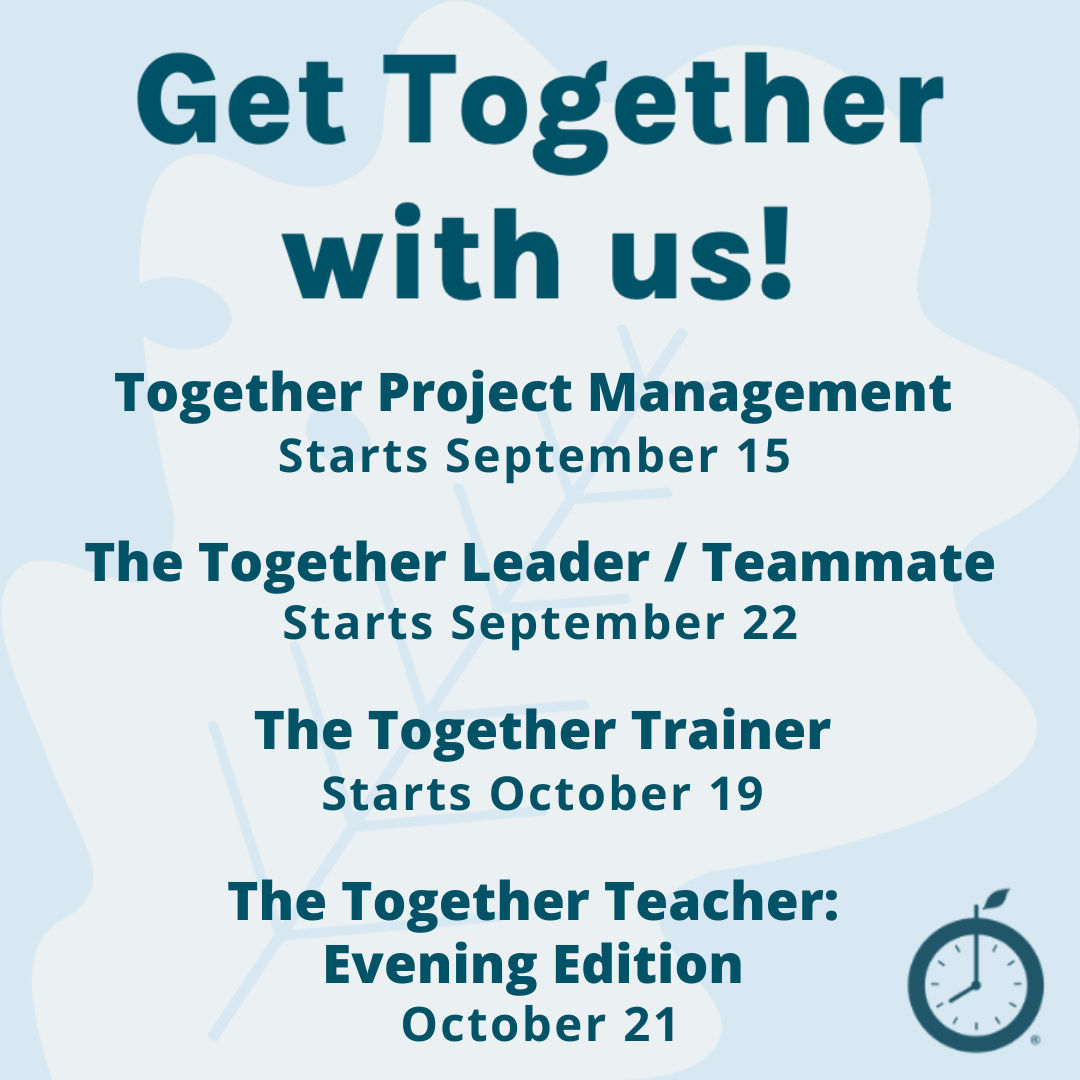
Is it still April? How are your spring allergies? Same, me too! And if May-Cember is creeping up on you, come join us for a Priority Planning class or create your very own Priority Post-it! And if you are hunting for the perfect end-of-school or end-of-fiscal-year gift, the Together Trilogy stands the test of time.
Together Tour: Jenn Greene
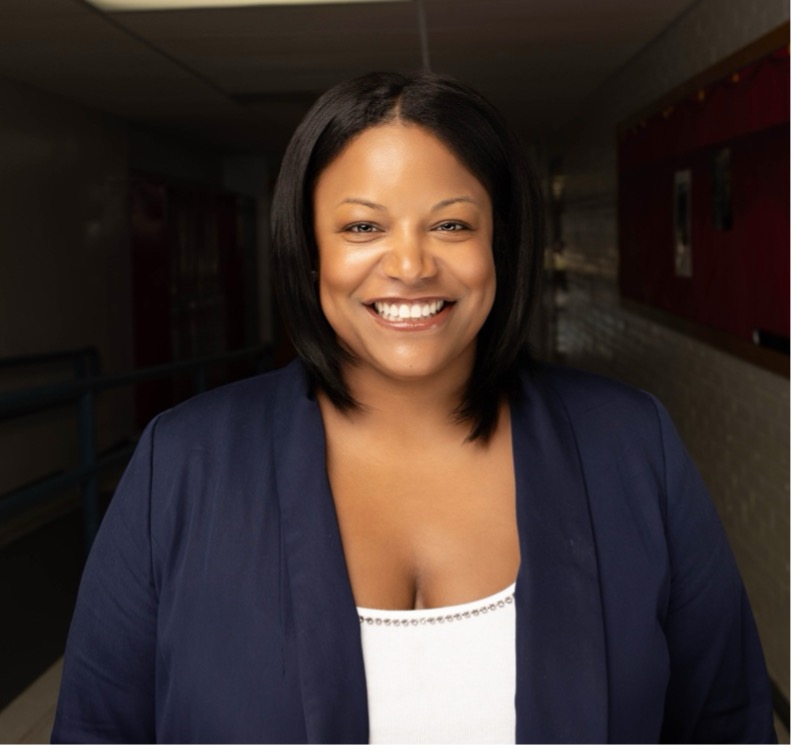
This month, I’m so excited to introduce you to Dr. Jenn Greene, Executive Director at Tulsa Legacy Charter School. Jenn’s path through Teach For America, YES Prep, KIPP Columbus, and leadership roles across multiple cities has shaped a deeply thoughtful approach to leadership, systems, and — most notably — intentional living.
What stood out to me most in Jenn’s systems is that her work is grounded in clarity about her life, not the other way around. From her now-famous “Together Trifold” to her weekly planning and reflection routines, Jenn is building a system that helps her live — as she puts it — more by design than by default.
Let’s take a look.
What led you to create your “Together Trifold”?
It really came from a moment last December when I didn’t feel accomplished personally. I was seeing people on Instagram doing year planning, and something about it stuck with me. So one Sunday — January 4th, before real life started back up — I went all in. I bought the materials, sat down, and built the whole system in one evening.
At first, I didn’t even want to write on it because I didn’t want it to look messy. But I knew I needed to include certain anchors — travel, financial goals, birthdays, major commitments — so I started using Post-its. As I built it, an organized structure just… emerged. And once it was done, I felt this sense of power. Seeing the whole year laid out made me realize: a year is actually not that long.
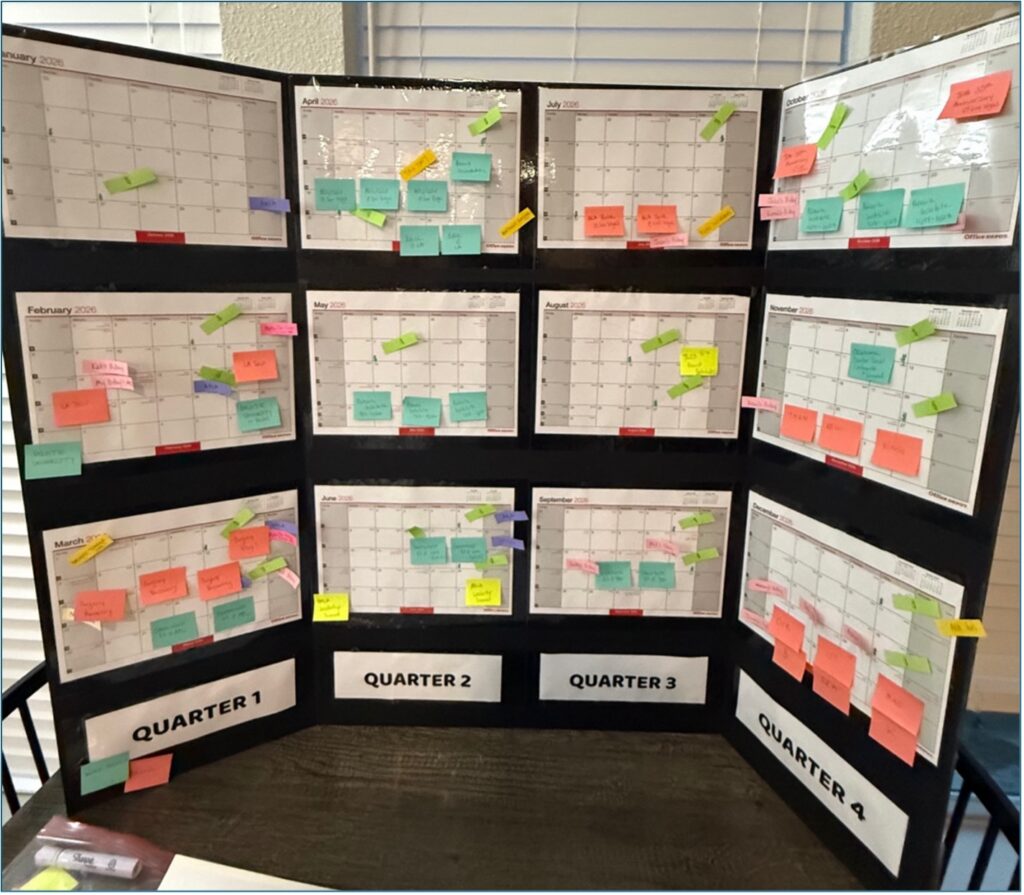
How do you use the Trifold to make decisions throughout the year?
It gives me visibility months in advance, which changes everything. For example, I travel a lot for fellowships and work, so I can see when I’ll be out of town and plan things like boarding for my dog or coordinating with others. I can also see when big financial commitments are coming up or when I need to be more disciplined in a particular quarter.
There have been times where I’ve looked at the board and realized, “I actually can’t go to that wedding,” or “This isn’t the right time to add something else.” It helps me make decisions that are kind to myself — and honest about my capacity.
Do work commitments live on your Trifold as well?
Sort of — but not in a detailed way. I’ll include travel, major deadlines, or anything that impacts my time significantly. But overall, I don’t use it as a task tracker for work. It’s really a strategic life view, and my personal life leads.
What it gives me is lead time. If I know something big is due on the 25th, I can look ahead and decide, “This is the week I need to focus on that.” I’m very task-oriented by nature, so I use this system to zoom out, then plan my day and week in my calendar. That way, I’m not spending energy figuring out what to do in the moment — I’ve already decided.
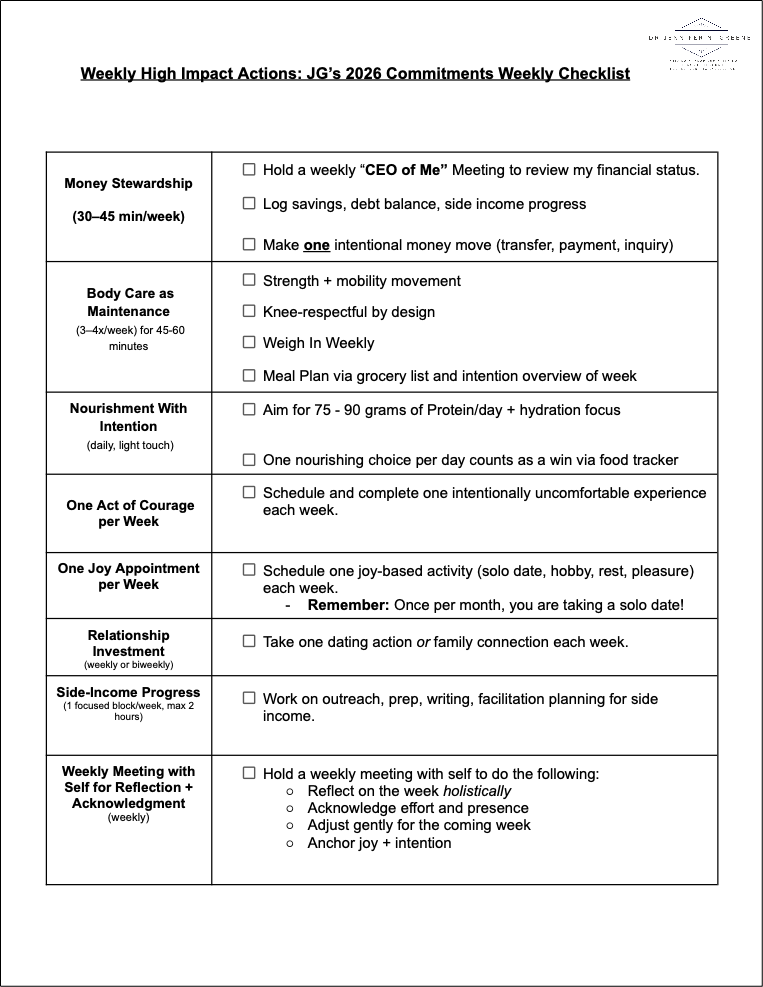
How does that philosophy show up in your weekly planning?
I translate everything into weekly High Impact Actions. I used to operate almost entirely off to-do lists, but now I focus on identifying the few actions that actually matter most. Then I plan those into my calendar. It’s about being intentional instead of reactive. I’m trying to be intentional about the design of my work and life!
In your role as Executive Director, how do you manage a heavy meeting load?
I use a capture tool in Google Docs, with a dedicated page for each person I meet with regularly. My agendas are very predictable and structured, and I organize them by quarter. That way, I can track what we’ve discussed over time without losing anything. It keeps everything in one place and makes meetings much more focused.
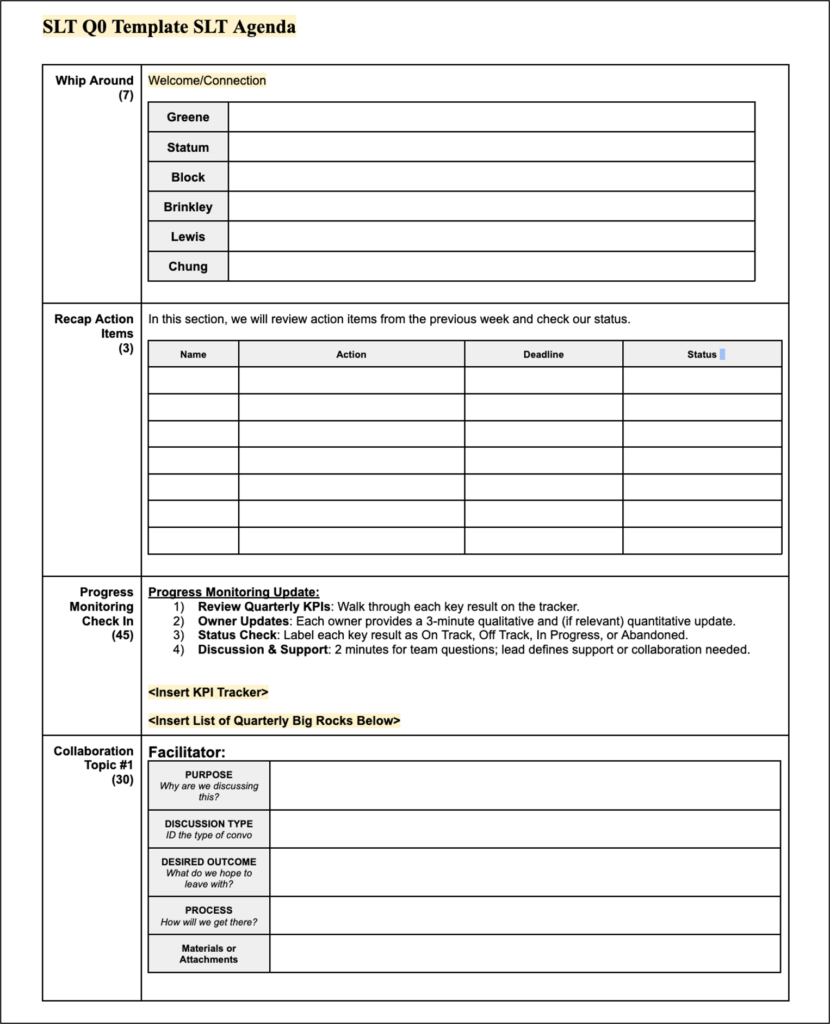
How does this system extend to your team?
One thing I noticed early on is that our team tended to be very task-oriented rather than outcome-oriented. So we got really clear about our organizational big rocks, our quarterly priorities, and our key performance indicators (KPIs). Every week, we focus on High Impact Actions — and we define them clearly: an action, an owner, and a deadline. Then we revisit them the following week. We’re very transparent about what got done and what didn’t — and that clarity comes from a place of care.
We also make time to reflect and acknowledge progress, which is huge for maintaining strong team culture.
You’ve made a clear shift toward prioritizing your personal life. What does that look like in practice?
This year, I’ve really focused on intention and attention. Last year, I was very productive professionally — but I was moving faster than the people around me, and I needed to slow down and reset. So now I’m being much more intentional about my personal life. I’ve set workout goals, planned solo dates, and tried new things.
For example, I joined a gym and started taking classes — including aqua aerobics! It’s not something I ever imagined myself doing, but I needed it for my knee, and I actually love it. And it’s not effortless. A 4:45 PM class means I have to leave by 4:00 PM, which means I have to structure my entire day differently. But that’s the point — I’m building a life where those things fit.
You also shared a personal reflection book. What role does reflection play in your system?
Reflection has become really important to me over the past few years. Binding the book made it feel real — like something I’m committed to, not just something I’ll get to “when I have time.” It helps me move through things that might otherwise feel overwhelming — especially around finances. Money can feel scary, but when I’m writing and reflecting, I can see that I am making progress and that I’m in control. It’s not just about executing the plan — it’s about pausing, noticing, and adjusting.
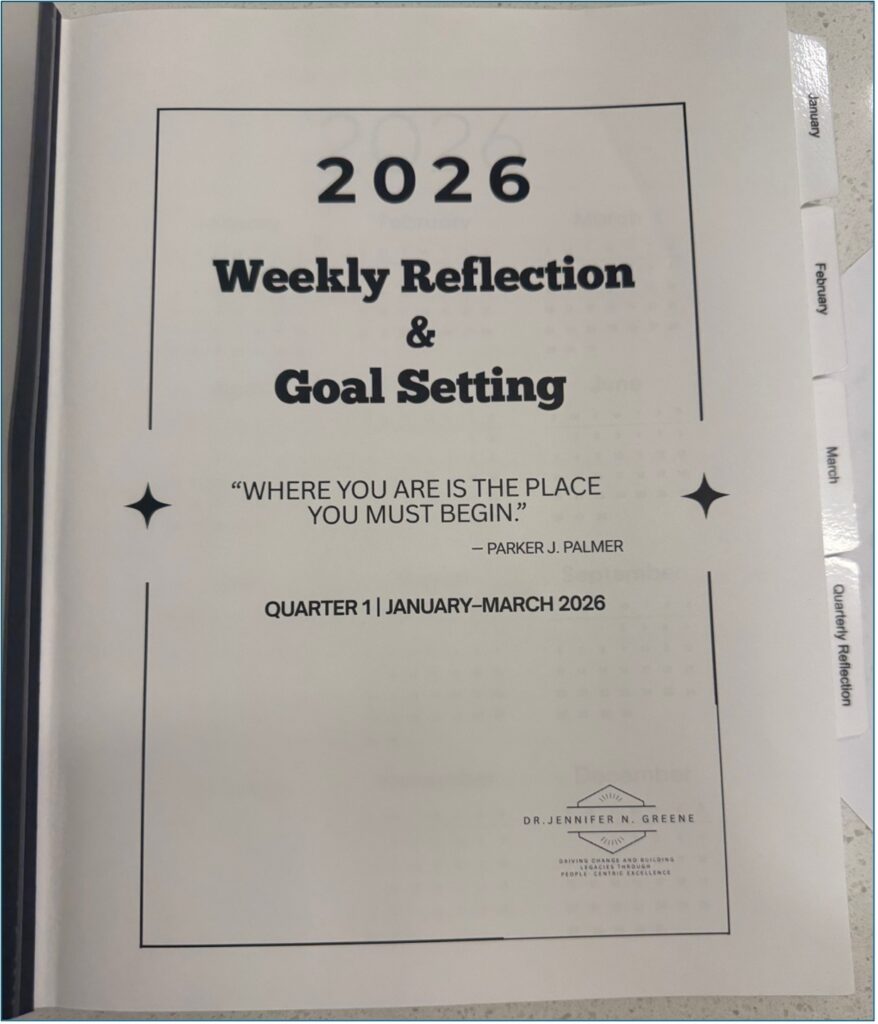
Jenn, thank you for such an honest and powerful look at what it means to build systems that support not just your work — but your life. Your Together Trifold is a beautiful reminder that when we step back and see the full picture, we’re better able to make decisions that align with our priorities, our capacity, and our values. And your emphasis on reflection — not just execution — is something we can all learn from.

-
Take notes with Togetherness in mind. Many of us are in meetings several times a week, and we need to take notes. So what kind of notetaker are you? Do you prefer the novelty of AI, the ease of digital tools, or the simplicity of plain old pen and paper?
-
How do you get in the (Together) Zone?Whether it’s an athletic competition, artistic performance, or professional event, we all have our own warm-up rituals to help us get ready. And if you’d like to learn how The Together Group prepares for our online trainings, join us for our next Together Trainer course in October! Email us for early access!
-
Are you Team Color-Coding?Could you check your calendar and tell at a glance whether a hold was personal- or work-related? Whether you color-code by type of work, location, or priority, color-coding can help you quickly assess your upcoming events.