At the start of 2026, I got curious how people approach long-term planning, not necessarily goal-setting, but how they look at the big picture of an entire year. And I went searching for a template of a portable year on one page, and I happily found this one. It’s a great tool, though in the end our team may build our own. And then a few favorite Together Friends popped up with some cool ideas.
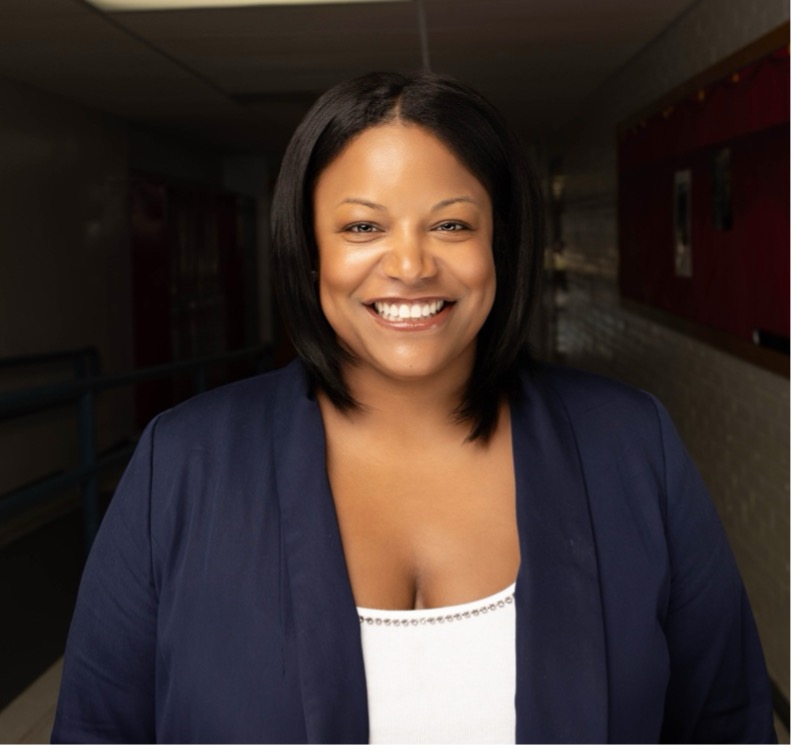
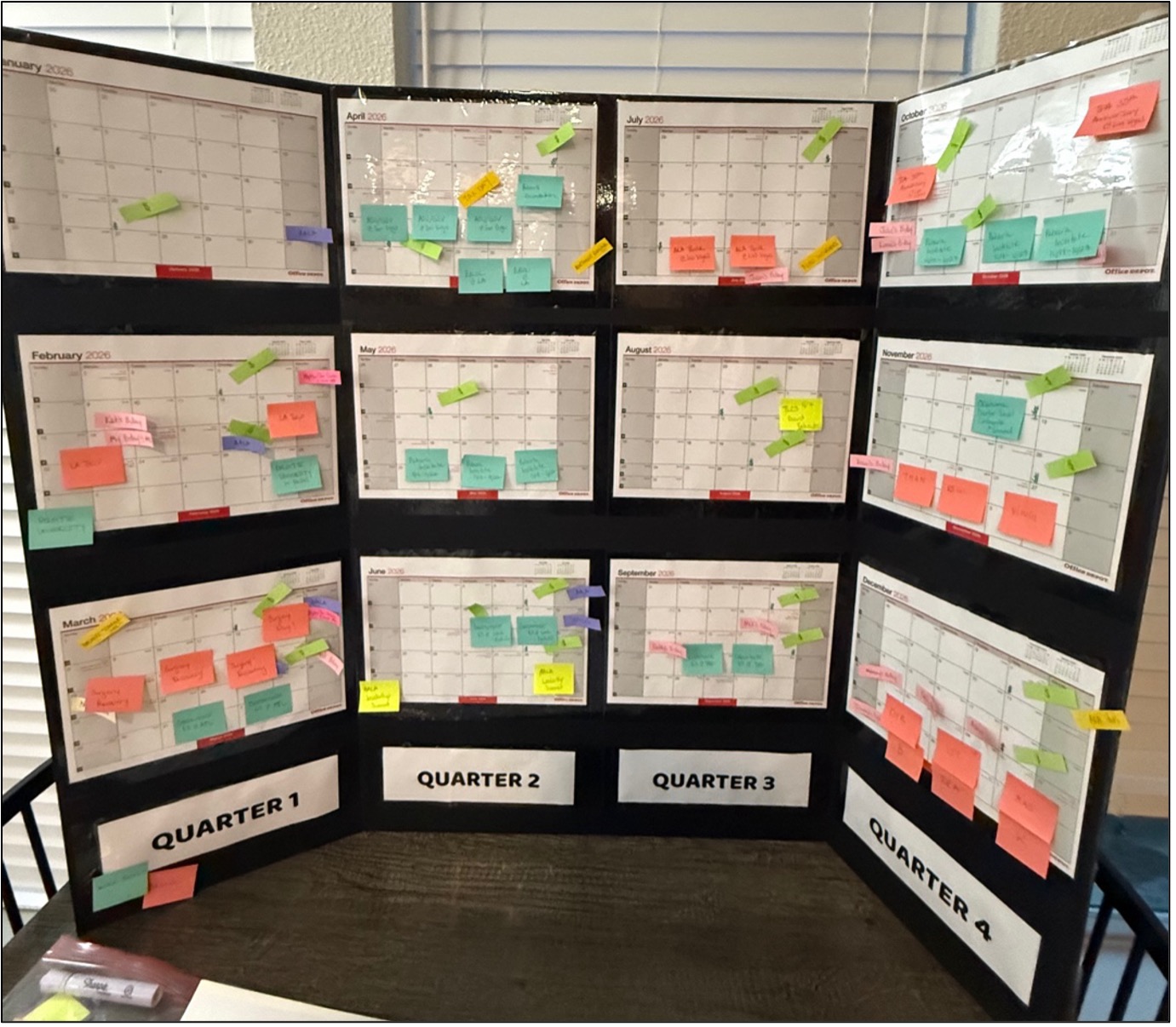
Dr. Jenn Greene in Tulsa shared her “Together Trifold,” and I was so intrigued that a full feature on this is coming soon. Jenn described the power of planning: “Laying out my calendar with moveable sticky notes helped me see the personal items, events, and travel – thus helping me feel more in control.”
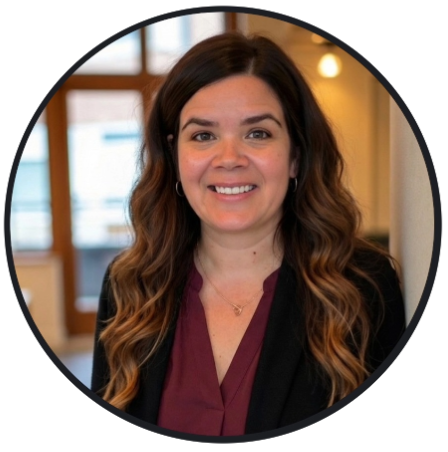
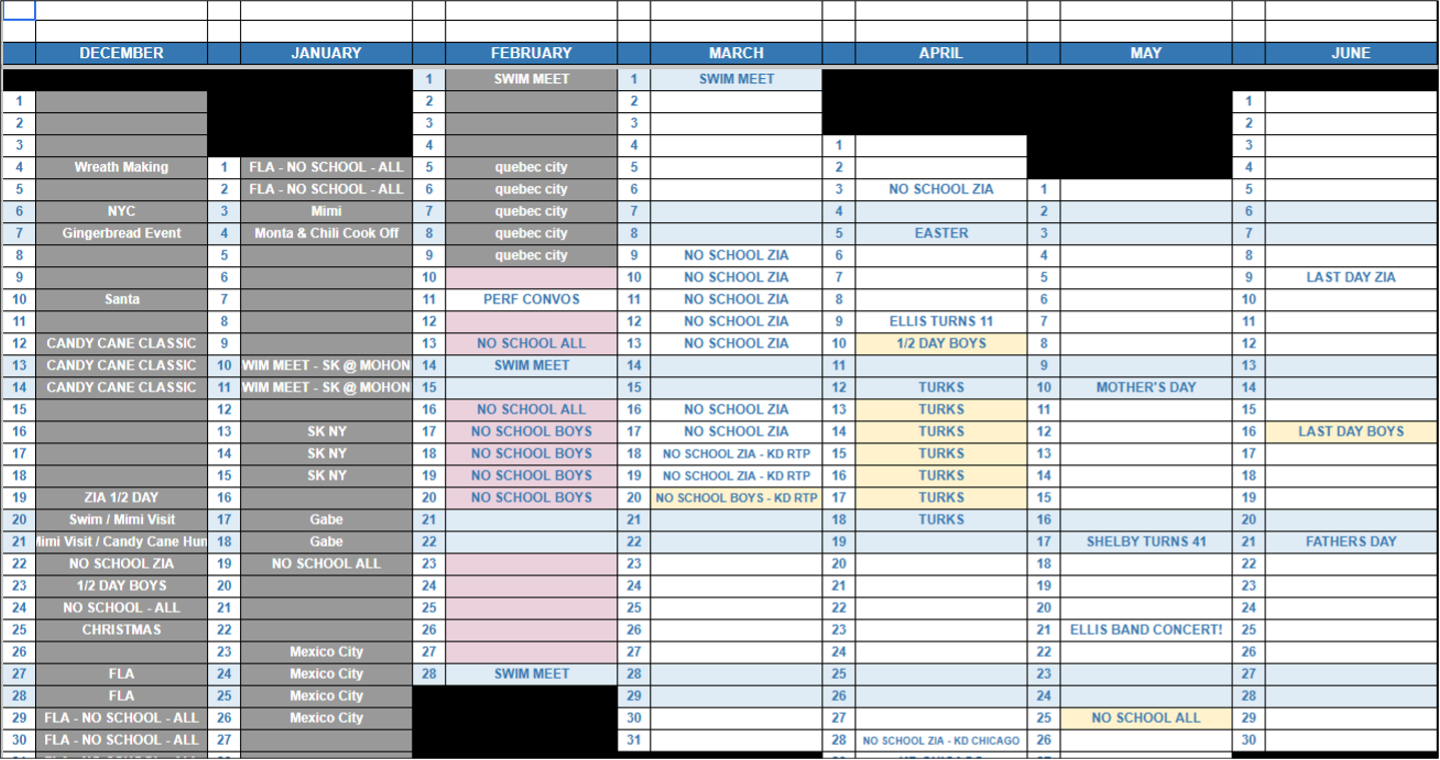
Then former Together Team Member Shelby Lee Keefer shared this amazing Google Sheet that she and her husband use. They are juggling three small kids, not to mention jobs and pets, and when I asked the why, Shelby said, “Using my week-by-week Google calendar, I would find that we would plan big events way too close together (overwhelming) or way too far apart (social desert). The Google digital calendar is still the source of truth, but the At-a-Glance calendar shows the shape of the month and the year. I use the format I made in excel to force me to just put big events – I don’t want to introduce more opportunities to conflict with the source of truth. Plus, I enjoy the color coding.”
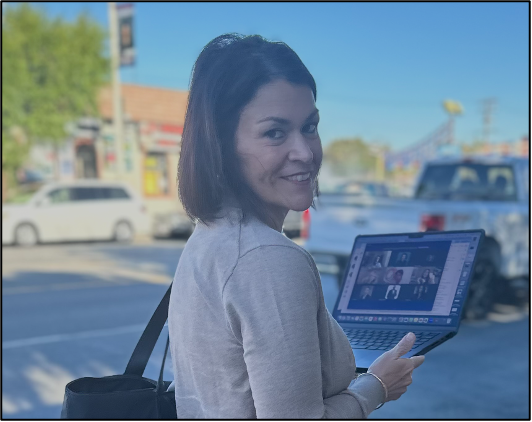
And then longtime Together friend JoAnn Gama popped up with her approach, a giant family wall calendar for 18 MONTHS AT A TIME. She buys two 12-month calendars and cuts them at 6-month intervals so she can change them out twice a year. I asked her why, and she said, “We value family experiences, and if it is not on the calendar, it doesn’t happen. I overlap work and home in one digital system, and I share all the invites with each family member. And yes, I’m training the teens to keep their own calendars. But this keeps sports, school, work and travel visible for everyone. An 18-month at-a-glance hard calendar keeps everyone aligned, accountable and informed – plus I’m trying to limit the questions of ‘When do we leave for X?’” (Editor’s note: Me too, JoAnn, me too!)
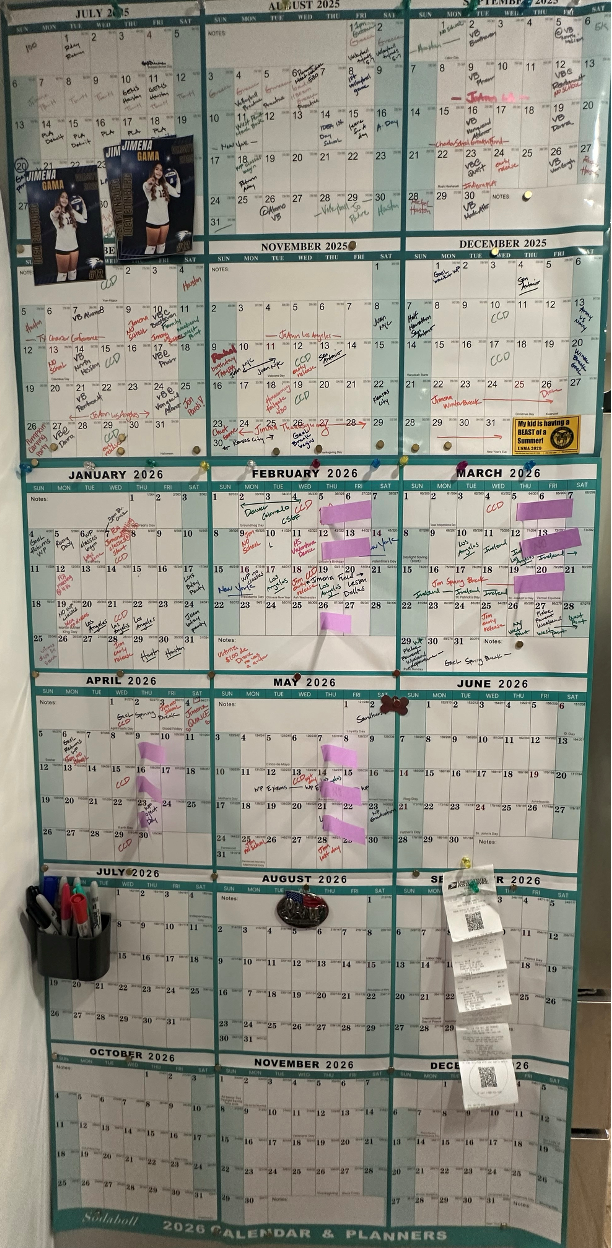
While many of our organizations have an annual goal-setting cycle, often built around the fiscal or academic years, I found this process of calendar-izing to be a bit different. What I heard from Jenn, Shelby, and JoAnn (and know from my own experience) is that this kind of super forecasting allows us to:
- Manage energy (this is my main reason for doing this)
- Plan for known events
- Communicate with others
- Know when to say yes and no
- Strike a balance of work and home
How about you? Any annual planning approaches that have worked?