Dear Together Friends, Fans, and Family,

In what will come as no surprise to anyone who’s ever caught me scribbling in a journal or hidden behind a lock-and-key diary, I was an AVID Harriet the Spy–style kid. Those pages turned into locker-side reflections in middle school, which then gave way to a published paid newsletter in my first year of teaching… and now here I am, 15 YEARS of monthly newsletters and five books later, still thinking about how we gather our thoughts, our stuff, and create containers for our memories and as an archive.
As the year winds toward its Core Memory Production phase (you know the one – holidays, gatherings, photo ops, and yes, the acquisition – and ideally accompanying purge – of STUFF), I’ve been thinking: I usually deal in the realm of time and To-Do’s, not cereal-Tupperware-organization (because let’s be real – organization is someone’s skill, but not necessarily mine). But I’m increasingly fascinated by how people organize their stuff in ways that support joy, promote creativity, and give our memories a home.
With the use of physical photo albums fading, and digital snapshots flying everywhere, how do we all make sense of the tangible emotional “stuff” in our lives – especially now, when the year is wrapping up and the stuff tends to accumulate? Here are some of the ways I’m leaning into memories. Feel free to pick one (or two, or all) and see how they land for you.
Junk Journaling. Instead of tossing programs, ticket stubs, little doodles, name tags, or ticket-rolls into recycling, what if we treat them like creative scraps? Tack to a bulletin board? Sure. But also: glue it into a journal, annotate it, doodle around it, call it “memory material.” For me, I tend to either pin stuff or toss it – this feels like a happy middle ground.
Memory Boxes. Each kid in our family has a large plastic tub where I dump the report cards, theater programs, birthday cards, and other special things. My daughter has already elevated the concept: one box per high-school year, complete with homecoming tickets, snapshots, etc. What if you created a current-year box now, so you’re capturing the stuff while it’s still fresh?
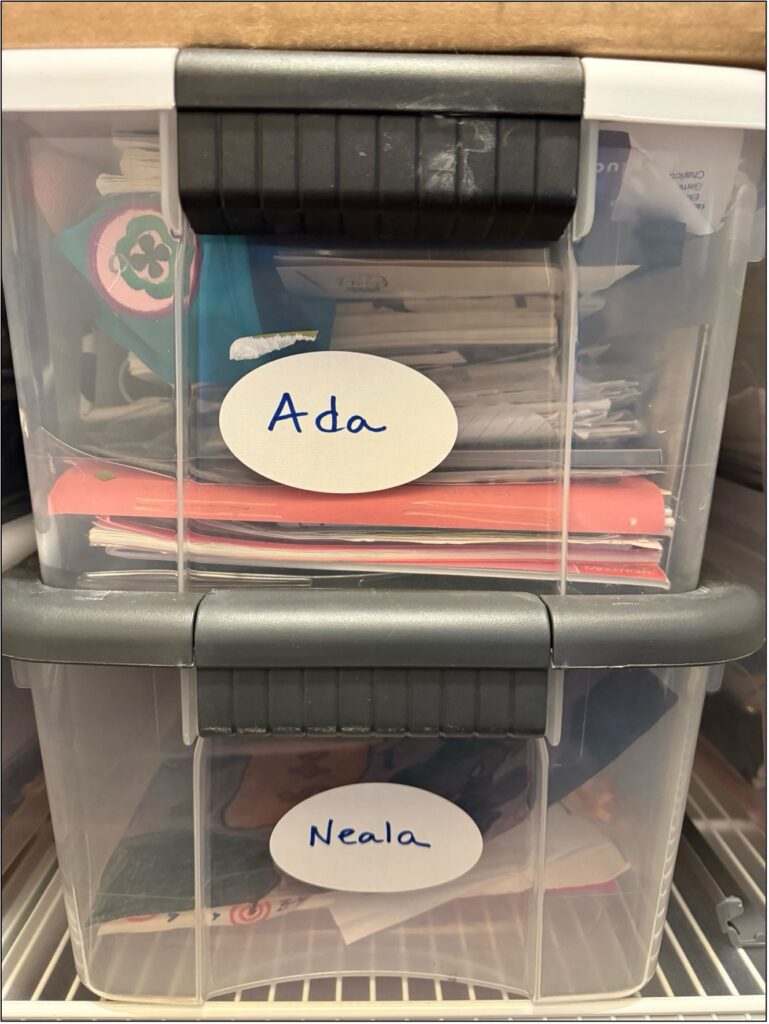
A couple of Semi-Together Teen memory boxes!
Holiday Card Hooks. I’m on a mega holiday-card circuit (what can I say – there are hobbies), and at last count, I think our family sends around 400 cards a year and receives several hundred in return. Until five years ago I recycled the cards at season’s end. Then one of our Together Team members (shout-out Ana!) suggested: hole-punch each card while you’re watching a movie and collect them all on a large ring. Instant tradition, instant memory archive, instant conversation piece. Instead of “what do I do with the stack of cards?” you’ve got a ring full of faces, greetings, and moments which you can enjoy perusing throughout the year. File under funny: One of the 15-year-old’s friends was here over the weekend and flipped through the Holiday Hoop of Cards, and was like, “How do you know THAT KID?”
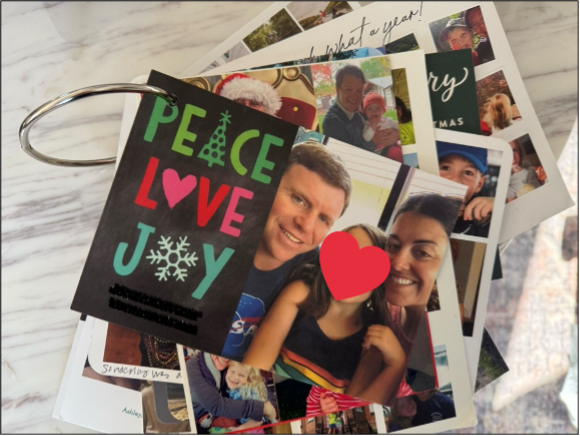
Holiday card hooks help calm the clutter of hundreds of cards!
Specialty Storage for Special Stuff. I’m not advocating single-use storage for everything (that’s a slippery slope). But some items do deserve a little extra care. Example: I have a bunch of triathlon participation medals (and yes, a few podium ones). I framed the best ones. You don’t need to create a museum – but find a place that implies this matters. Do you have any collections or sets of special things that could be displayed for memory purposes?
Mini Photo Albums or Collages around Specific Events. Family trips (hello, Maine!), milestone weekends, “just because” days – they don’t always warrant a full-blown album, but they do deserve more than a folder in my camera roll. I use things like Chatbooks or hop on Shutterfly when there’s a sale to create mini-albums. Quick flip, low-pressure, high-memory. You could pick one recent event, select 20–30 photos, and make a “mini” album this week.
Memory-Scan Ritual. Here’s one more: at the end of the year (or calendar break), take 30 minutes and scan (physically or mentally) your surroundings. What one thing do you want to save, preserve, or elevate? What one thing do you want to let go? What one new container (journal, box, album, ring) do you want to start for next year? Treat it like a “Together Check-In” for your stuff. I plan on updating my bulletin board over my desk with photos of the past year – and getting rid of duplicates on my phone’s camera roll.
Anyway, while I will never win awards for perfect neatness, it is kind of fun to take stock of the year’s memories and decide: How do I preserve them in low-key, joyful ways for the future?
Before this week gets away from you, take ten minutes – yes, set a timer – to do one tiny thing that Future-You will thank Present-You for. Pick one of the ideas described above and bring it to life:
- Punch last year’s holiday cards and add them to a ring.
- Start a “2025 Memory Box” with the first thing that made you smile.
- Gather 20 photos from one event and order a mini-album.
- Glue three scraps into a junk journal. Not perfect – just glued.
Then, let me know on LinkedIn which memory-keeper you chose (and check out other ideas). I love hearing what systems real humans create to hold their joy, their mess, and their magic. It inspires the whole Together community.
Here’s to memories made and containers created for what matters during a busy holiday season.
#togetherforever #clipboardsandclogs
Maia
PS On the topic of memories, when we unearthed our holiday tubs this year, I found a hand-scribbled menu from two years ago, and there is just something about stumbling on a handwritten item that really takes you back in time.
PPS I’m not asking for any holiday gifts from you all, but if you were so inclined to forward our class offerings to a friend, follow us here, here, or here, or jot a review for any of our books, it is hugely appreciated!

- Getting organized can seem so daunting. The Home Edit and Marie Kondo may be popular, but they can also feel way too intimidating to even get started. Maybe micro-organizing—keeping things small-scale and focused—is a better way to get started and keep it manageable.
- Audit your instructional and meeting materials for clarity. Even the best-planned lessons and meeting agendas can fall apart if students and adults aren’t able to process the information. But if we adjust our materials with brain science in mind, they can be even more effective. Visual scaffolding for the win!
- Get the pebbles out of your shoe. We all have those pesky pebbles—smaller tasks we have to do but aren’t super urgent (ahem, currently mine include a vision care reimbursement, retrieving a flight credit, and turning off car insurance for our car that just got totaled. . . don’t worry, we are all fine!). Laura Vanderkam invites us to clear those pebbles out by early 2026 and start the year with no friction. Perhaps some Deep Admin Time is in order?