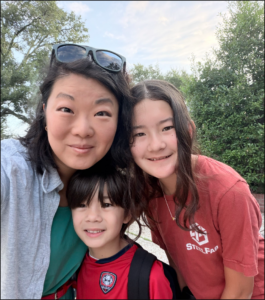
As we head into a fall full of federal holidays, religious observances, and occasional time off, I’ve been thinking about people’s approach to auto-replies. You may think it’s a straightforward thing, but you’re making a lot of little decisions along the way. I mean first, you have to decide if you even want to set one up, then what you want it to say and signal, and lastly, how long to keep it posted.
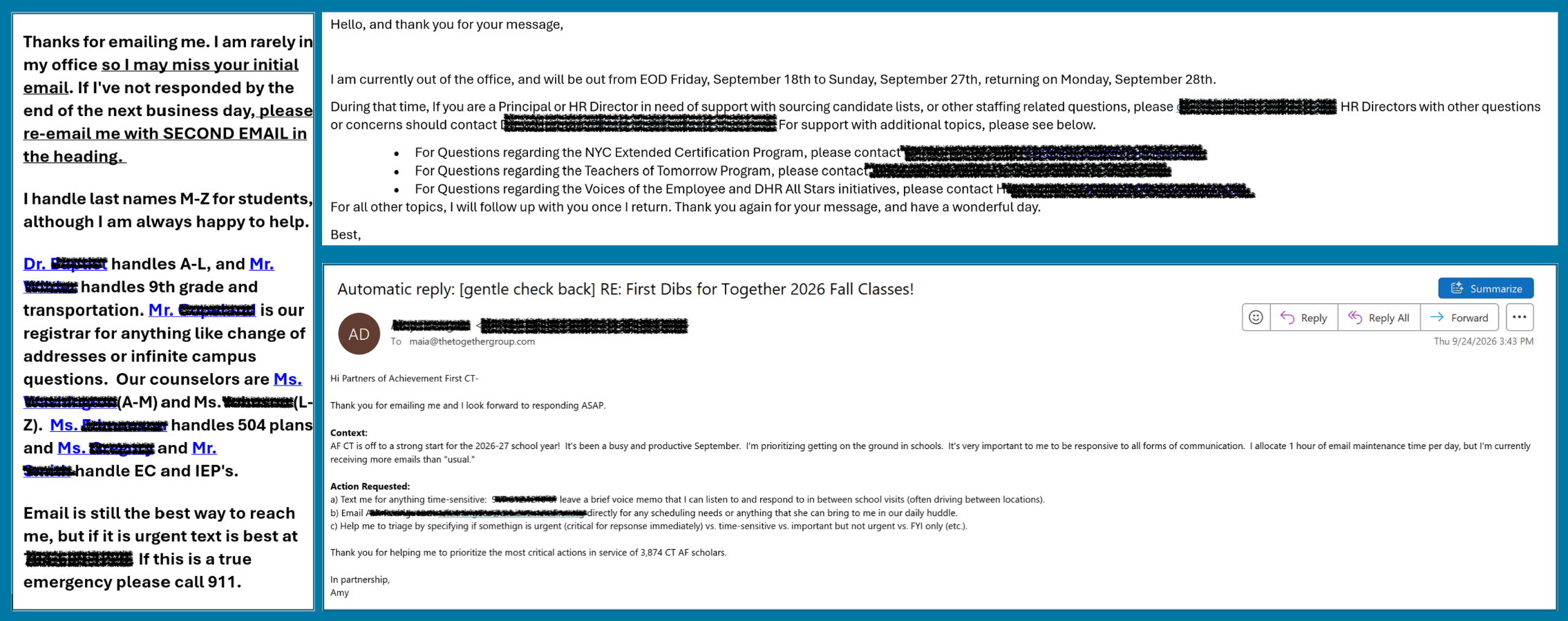
I am perhaps the only person in the world who looks at auto-replies with such a high level of curiosity, but I have so many questions, such as,
- Does your organization have a standard reply or is it a free for all?
- When do you post your auto-reply? A day before you disappear or the day of?
- Do you tell people why you are out?
- Do you set up an auto-response if you are not out-of-office, but perhaps focused on other priorities?
- What tone do you strike? Professional or playful? I have noticed a trend lately of people publicizing their self-care, but personally I’m too private for that!
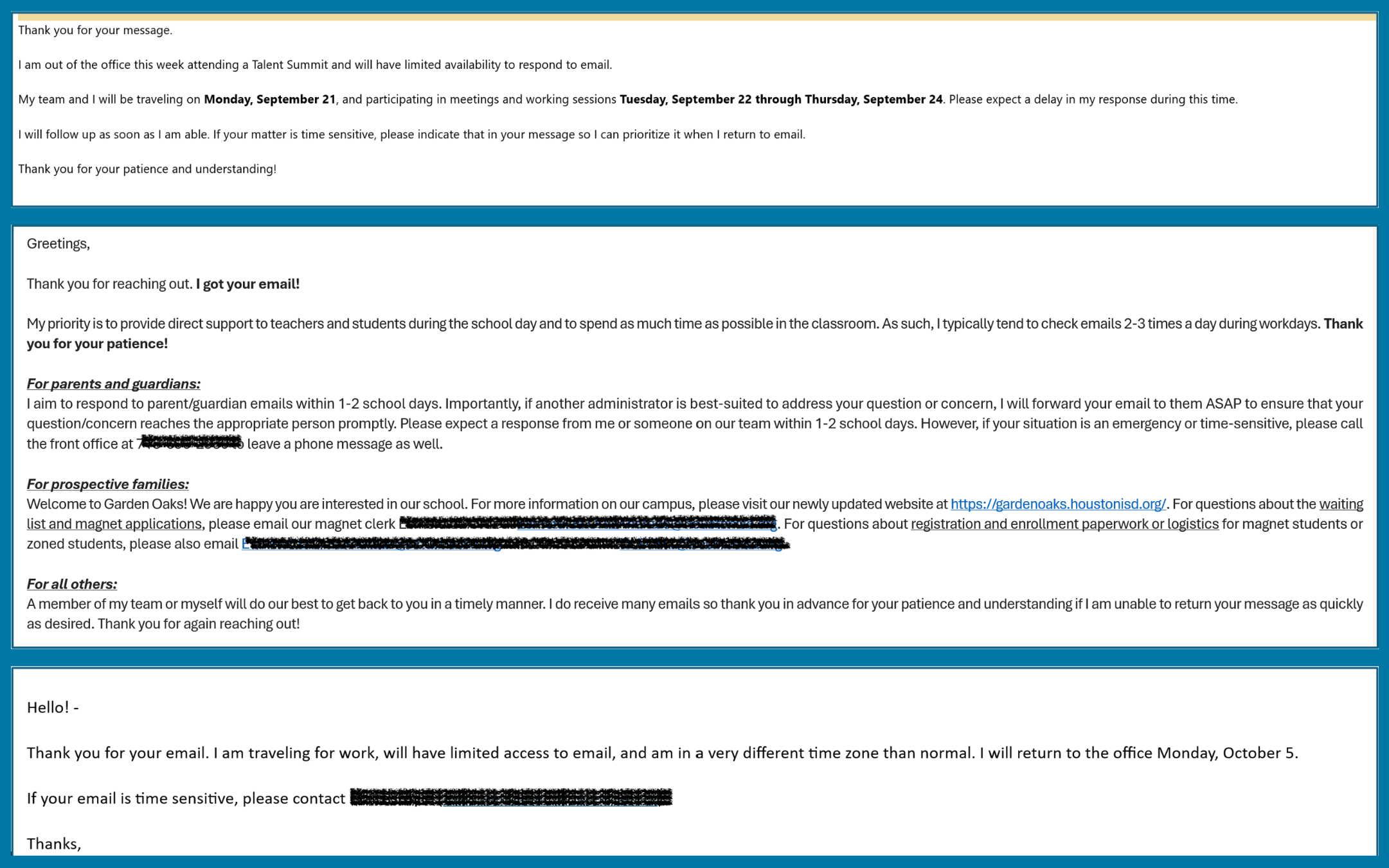
As you prepare for out-of-office time, it seems there are a few best practices to consider:
- Post your OOO reply with ample time before you actually leave. For example, I was headed on a work trip to the West Coast last month with an early morning flight on Thursday. This means I wanted to get my auto reply up on Wednesday morning. You may also want to give yourself time when you return to re-enter. (I realize not everyone has the flexibility to expand their OOO time, but if you do, it can be a great move!)
- Offer some self-serve or auto-assistance, such as other people to reach out to. Bonus points if you list some bullets of commonly asked questions and ways people can get them answered in your absence.
- Direct how you will prioritize upon your return. I have noticed some auto-replies direct people to email again with a clear subject line (my love language, really), making clear what order they will answer replies. For example, my OOO may say something like, “I will answer all queries related to this week’s courses first, and other inquiries within 48 hours.”
- Offer an alternative method to reach you, if needed and if you want. I see people do this if they are busy running a conference or board meeting, and not in front of email as often. Some folks will say, “Text, Teams or Slack me for immediate assistance.” Of course, only do this if you can actually reply!
- Name your patterns and habits. I’m seeing more and more people say that email is not their top priority (take that Inbox Zero!), and setting up a permanent auto-reply while they’re in the office with a message like, “I only check email 2-3 times per day because XYZ.” This helps set expectations for various contacts, or even for your teams internally. I remember one of my kid’s second grade teachers boldly told us, “If I answer all of your messages right away, I’m not actually teaching your children.” Message received!
Of course, you could always just delete everything when you get back. I am kidding, though Together Team Member Lauren did this after both her maternity leaves and says it was liberating. Relatedly, I once asked my internal team to hold all emails when I was on vacation and instead put them in one memo for me to read upon my return – and that made coming back to the office way less scary!