Dear Together Friends, Fans, and Family,
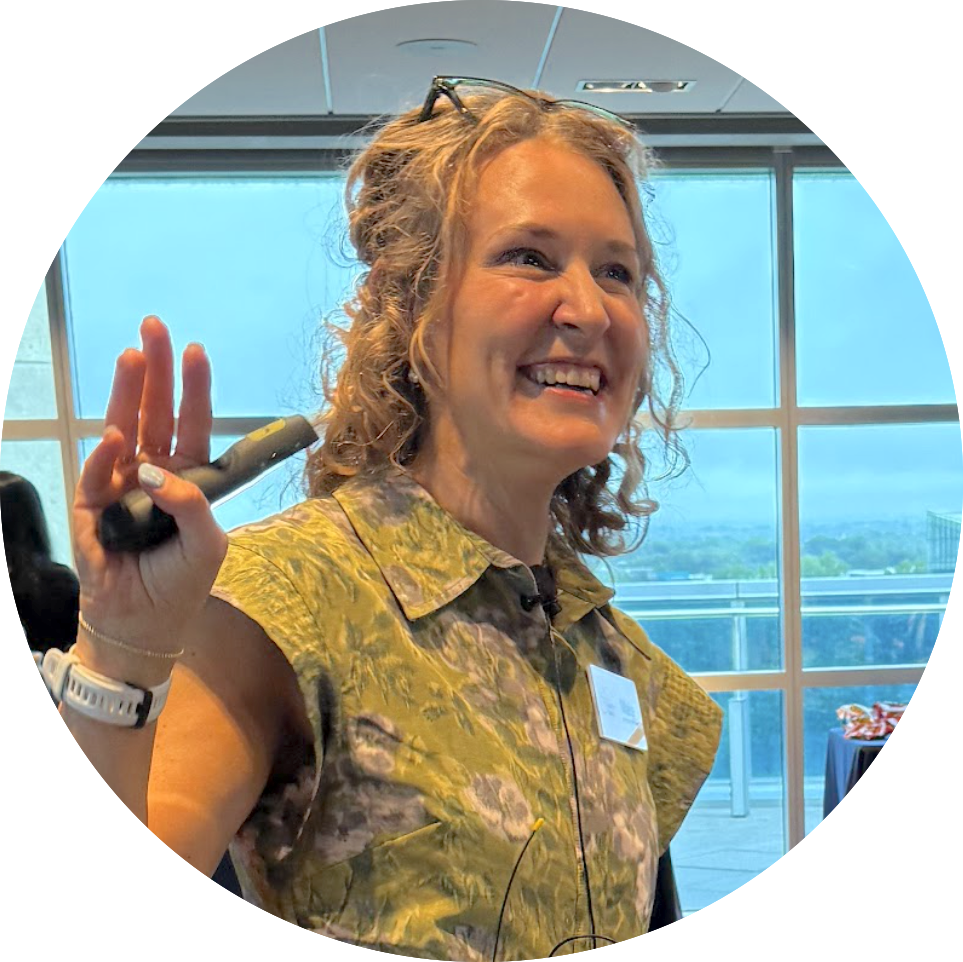
Back in May, when looking ahead on my calendar, I anticipated that after 14 weeks of Together Travel, I would need an intersession week leading up to Labor Day. That term may mean different things for different people but for me, I try to have a week each trimester with very little teaching and very few scheduled meetings (this is privilege of building my own schedule, but there are ways this idea can be adapted in any role!). Anyway, I knew I needed to handle some very practical things (dear accountant, I’m sorry I missed some emails from you!), put life back Together-ish on the home front (video doorbell that wasn’t working, you are now fixed!), and also do some creative work (a few fun things brewing that I don’t want to fully speak into existence yet, but I did hear the words come out of my mouth: Is it time for The Together Leader Second Edition?!).
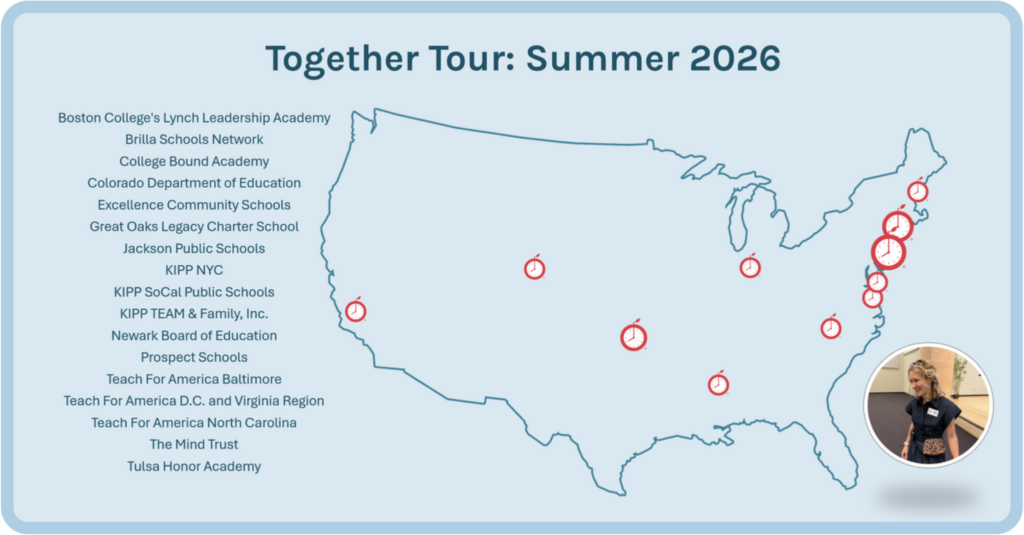
My Together Travel summer took me to so many places!
Anyway, I had plans on a particular Tuesday to do some of the more creative work, and for whatever reason, my brain simply couldn’t pull it off. I could examine why, and it could have been the soccer carpool until 10 PM the previous night, or the 6 AM standing Tuesday run with a friend in terrible humid DC Hot-umn, which is the new name for September around here, or the distraction of a password situation that took forever to solve. Whatever the reason, I could not, for the life of me, write this newsletter on the day I intended to do it. Basically, my plan did not match my capacity. This, my friends, is an occasional Planning Hazard (can I trademark this term?!). I’m pretty good at estimating what my capacity is on any given day, but capacity can take a lot of forms. A few that come to mind are:
- How much actual time (as in hours and minutes) do I have available? This is the most concrete and basic, and it takes the least amount of thought. We can glance at the calendar and most of us can easily see the amount of time available. But then we must go deeper.
- What kind of cognitive capacity is available to me? This is where it starts to get harder, and the key is to know yourself. (And if you don’t, start literally tracking when you have higher cognitive capacity.) I had THOUGHT on that particular Tuesday that I would have higher cognitive capacity that day because I had no meetings, but over the summer, I forgot that my most creative work time is very early in the morning, in the semi-dark of my office. I used that time on a run that Tuesday morning.
- What kind of environmental capacity to do I need? I work from a home office when not traveling, but around 3 – 5:30 PM, my house starts filling up with Semi-Together Teenagers streaming in and asking for mango smoothies (insert an eye roll), so I have learned that it’s time to make myself scarce. I actually like to schedule calls for that time because I’m less likely to be interrupted, and the calls advance work I need to do anyway. I also know there are other times of day when my time can be more protected, so I attempt to build the focused work in there – turning off all the notifications, of course!
- What physical materials are available to me? As someone who loves working in front of her four screens in her teaching studio, BUT also loves just her laptop or a graph-paper notebook, I am attuned to the question of what materials you need when you are planning your time. I know there are certain types of work, like designing courses, that require multiple screens for efficiency, and there are also small administrative tasks that I can do when I’m on the sidelines of kids’ sports. Of course, you can always use a Work Purse!
Anyway, I’ll never quit being a planner, so it helps to think about capacity more broadly than just time available. And when you cannot anticipate your capacity, or if something comes up and changes your capacity, it helps to know how you will pivot. In my case, I had a list of Scary Life Admin that I attacked with a vengeance that Tuesday morning, so at least a doctor’s appointment was rescheduled, some staffing decisions were made, and some important calls were scheduled. And today, Wednesday, I wrote this newsletter! (This thing takes my team and me 6-10 hours a month to create, so if you like reading it, we love to get penpal notes! [hint, hint!])
#togetherforever #clipboardsandclogs
Maia
PS As mentioned in August, I’m headed to Vegas for the TFA 35th Anniversary Summit with so many other TFA alums next month. If you want to join Ana and me to say hello, have a few Together snacks, and help us brainstorm updates to The Together Leader, fill out this quick form here and we will shoot you a message with the details for a Togetherness hang! I’ll also be doing a Book Talk so feel free to come find me there as well!

- What does Wirecutter know about To-Do Lists? The Together Team loves a To-Do list, and we enjoyed perusing the recommendations from Wirecutter. They are deep into Google Tasks, which makes sense, and we love that for weekly level To-Dos. We would add to the list Google Keep for a Later List, and Todoist is a fan favorite as well. We may add to the list more sophisticated tools like Trello and Asana, but we’d never heard of Tick-Tick. Anyone out there using it?
-
Teacher Prep vs Teacher Planning? My dear friend Regan Kelly penned this guest post over on Substack, and it really got my wheels turning about the phrase and concept of teacher worktime during the school day. Her beach trip analogy on this is top notch. Anyway, it was a reminder of how important this preparation time is, AND in our work, we see how hard it can be to use it well. One thing I saw in my travels this summer that I loved was Tulsa Honor Academy’s dedicated teacher work rooms – with desks for every teacher, all curriculum needed to plan well, and more.
-
Tend to your network like you tend to your garden.As someone who sends 400+ holiday cards each year – and tries to write personal notes on the back of all the out-of-state ones – I love thinking about how one can be both sincere and systematic in building relationships. This article (Note: the full article is behind a paywall, but you can enter your email to read it for free) highlights ways you can be intentional around your network – and please try not to ask busy people to “pick their brain!” For example, I was thinking about how to make an upcoming event (TFA’s 35th Summit) feel manageable. My goal is to deepen existing relationships, so I’ve scheduled some meals with folks who are very important to me. Hi, Elena Aguilar!